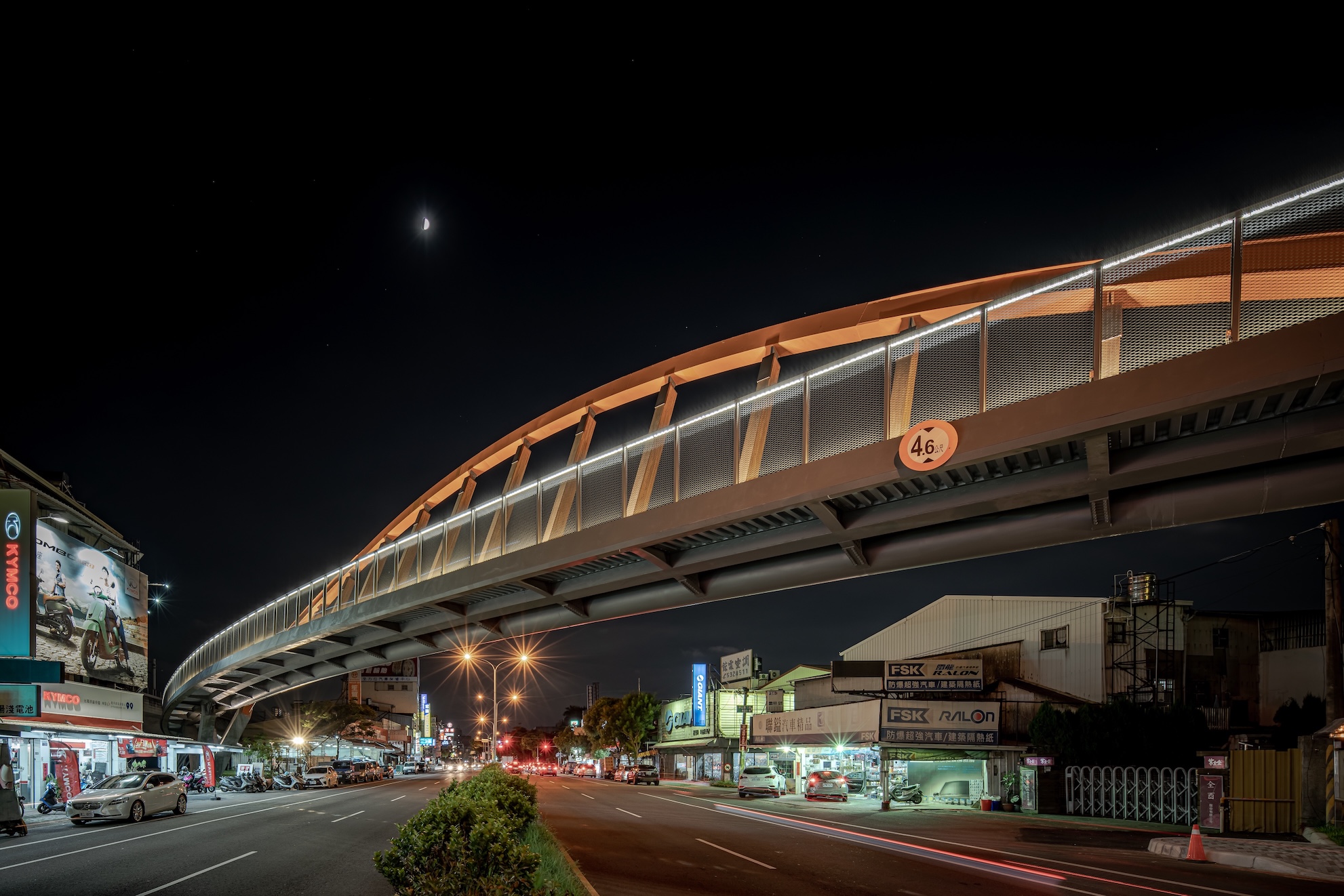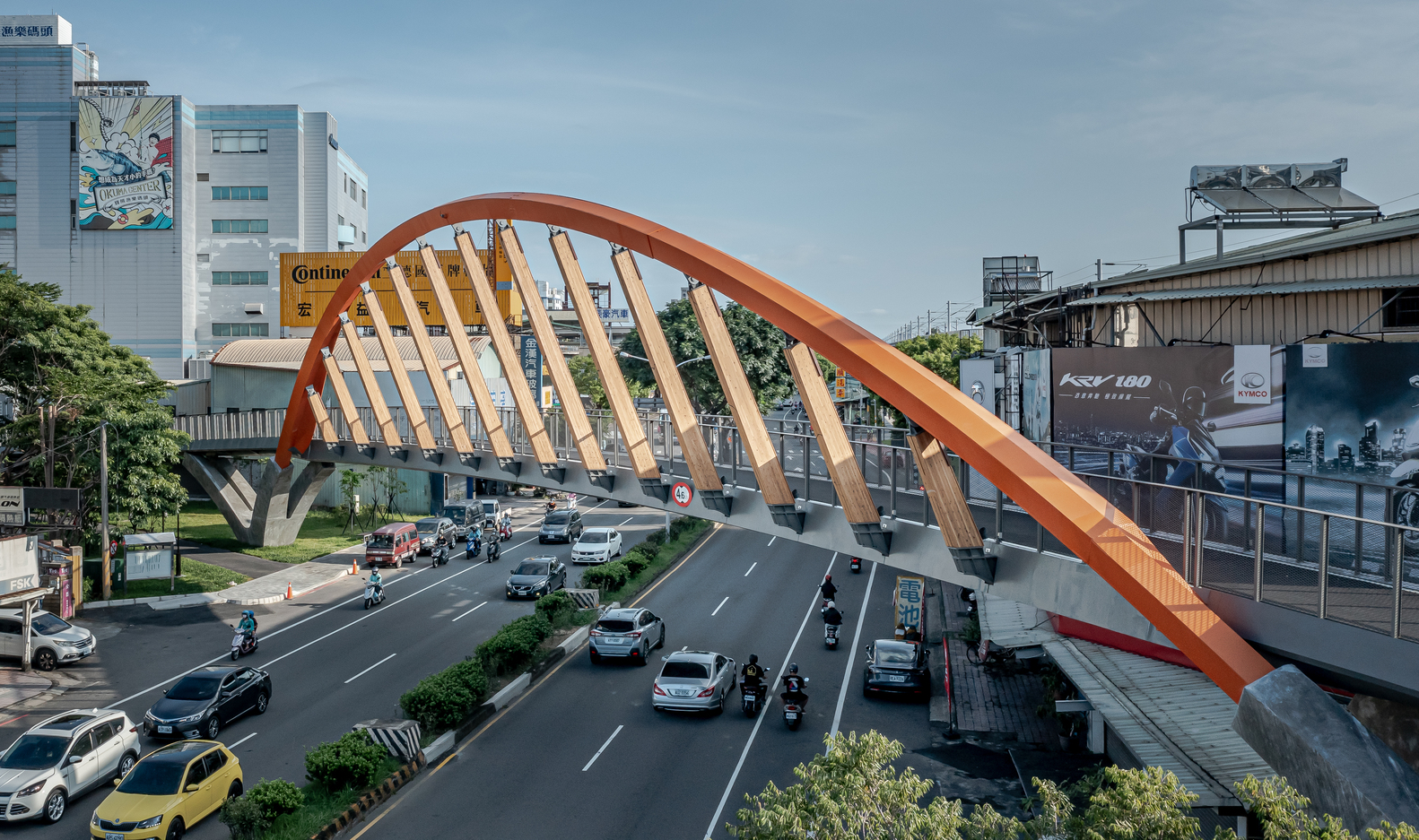
Human-centered transportation lies at the heart of the Tanzi Bicycle Skybridge. Following the construction of Provincial Highway 74 Expressway and the elevation of the railway line, the challenge was not only to integrate cycling infrastructure into the broader transportation network, but also to create a vital link between the Green Corridor Railway Trail and the Tan-Ya-Shen Green Bikeway.
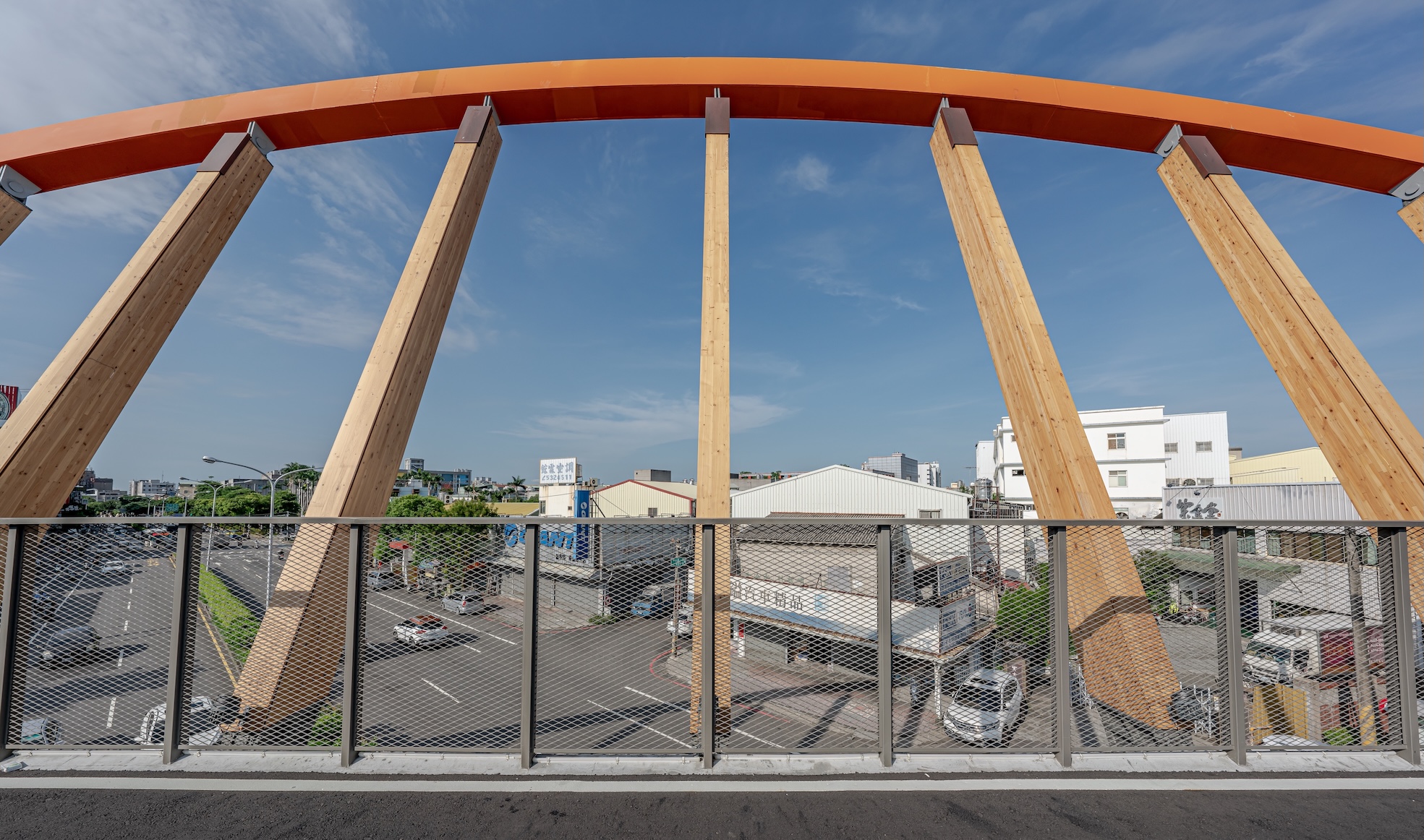
Stretching 52 meters across the railway, the Tanzi Bicycle Skybridge features approach ramps of approximately 120 meters on both sides. Its elegant structure spans the entire crossing without any intermediate supports, utilizing a combination of steel construction and locally integrated timber elements. The result is a visually light and architecturally distinctive landmark within the urban landscape.
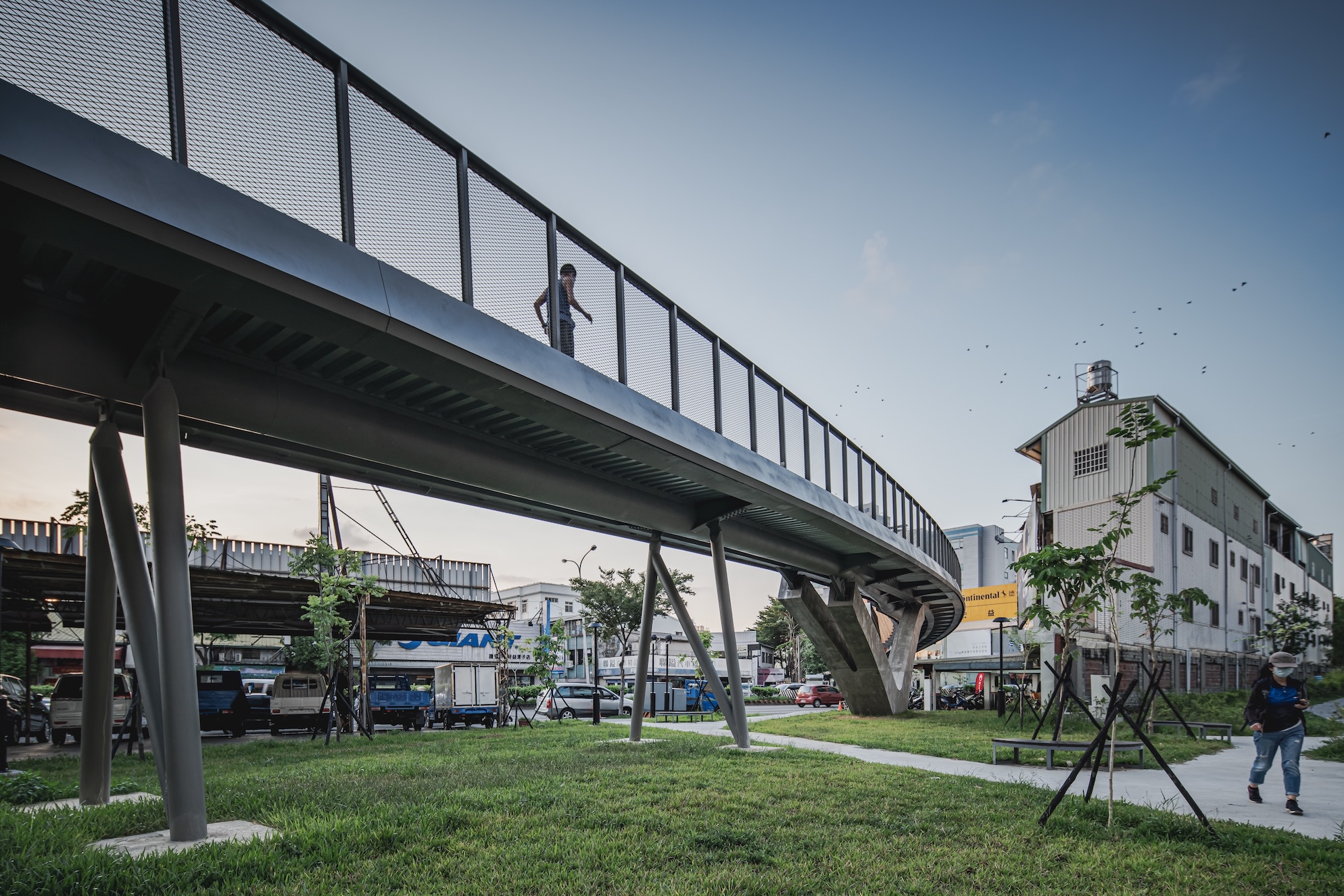
Beneath the elevated railway, previously underutilized space has been transformed into parks and cycling paths, creating a vibrant green environment where residents can relax, exercise, and connect with their community. More than a piece of cycling infrastructure, the project demonstrates how bicycle facilities can evolve beyond recreation to become catalysts for social connection, sustainable mobility, and urban renewal.
Human-Centered Mobility | Challenges and the Future of Urban Cycling Infrastructure in Taiwan
Reflecting on the realities of cycling infrastructure in Taiwan, architect Huang Ming-Wei, designer of the Tanzi Bicycle Skybridge, remarked:
“A truly dedicated bicycle network remains difficult to achieve in Taiwan today. Questions such as whether bike lanes should be placed alongside roads or integrated with sidewalks are still being debated. More importantly, finding ways for cyclists to coexist safely with motorcycles and buses in Taiwan’s urban environment presents a significant challenge. Within limited urban space, accommodating multiple public facilities while creating functional cycling infrastructure is far from easy.”
At present, the majority of Taiwan’s bicycle paths are designed primarily for recreation rather than everyday transportation. Many lack commuter-oriented functions and seamless connections between districts. In older urban neighborhoods, aging pavement conditions often reduce riding comfort, while illegally parked motorcycles frequently obstruct cycling routes and pedestrian spaces.
These challenges highlight an important distinction: recreational cycling routes and commuter cycling networks serve different purposes and require different design approaches. Recreational routes prioritize scenic experiences and leisure riding, whereas commuter infrastructure must focus on direct connectivity, safety, efficiency, and integration with other modes of transportation.
As Taiwan continues to promote sustainable mobility, the future of urban cycling will depend not only on expanding infrastructure but also on creating networks that support daily travel, connect communities, and coexist effectively within the realities of dense urban environments.
Design Aesthetics and Human-Centered Care | Mending the Urban Fabric from Leisure to Commuting
The concept of human-centered mobility aims to reduce reliance on private vehicles while encouraging the use of public transportation and (shared) bicycles. In this context, urban cycling infrastructure must evolve from its current recreational focus toward a commuter-oriented function, enabling tighter integration with public transit systems.
Through the example of the Tanzi Bicycle Skybridge, we can envision the next generation of bicycle-friendly cities—where cycling is no longer merely a leisure activity, but becomes an essential mode of urban transportation. This shift transforms riding into a meaningful part of everyday city life, helping to create a safer, more comfortable, and more sustainable urban environment that truly supports bicycle-friendly mobility.