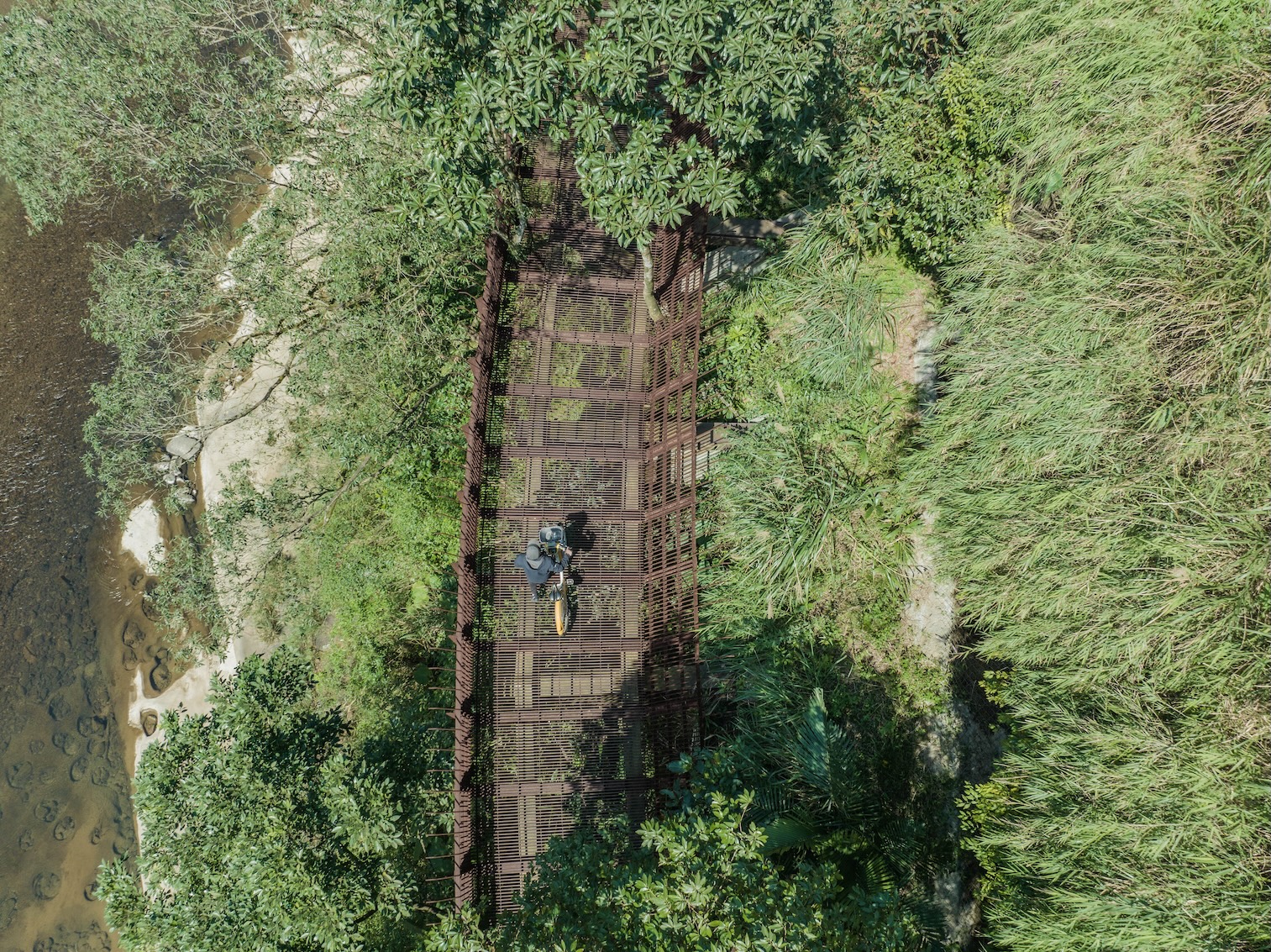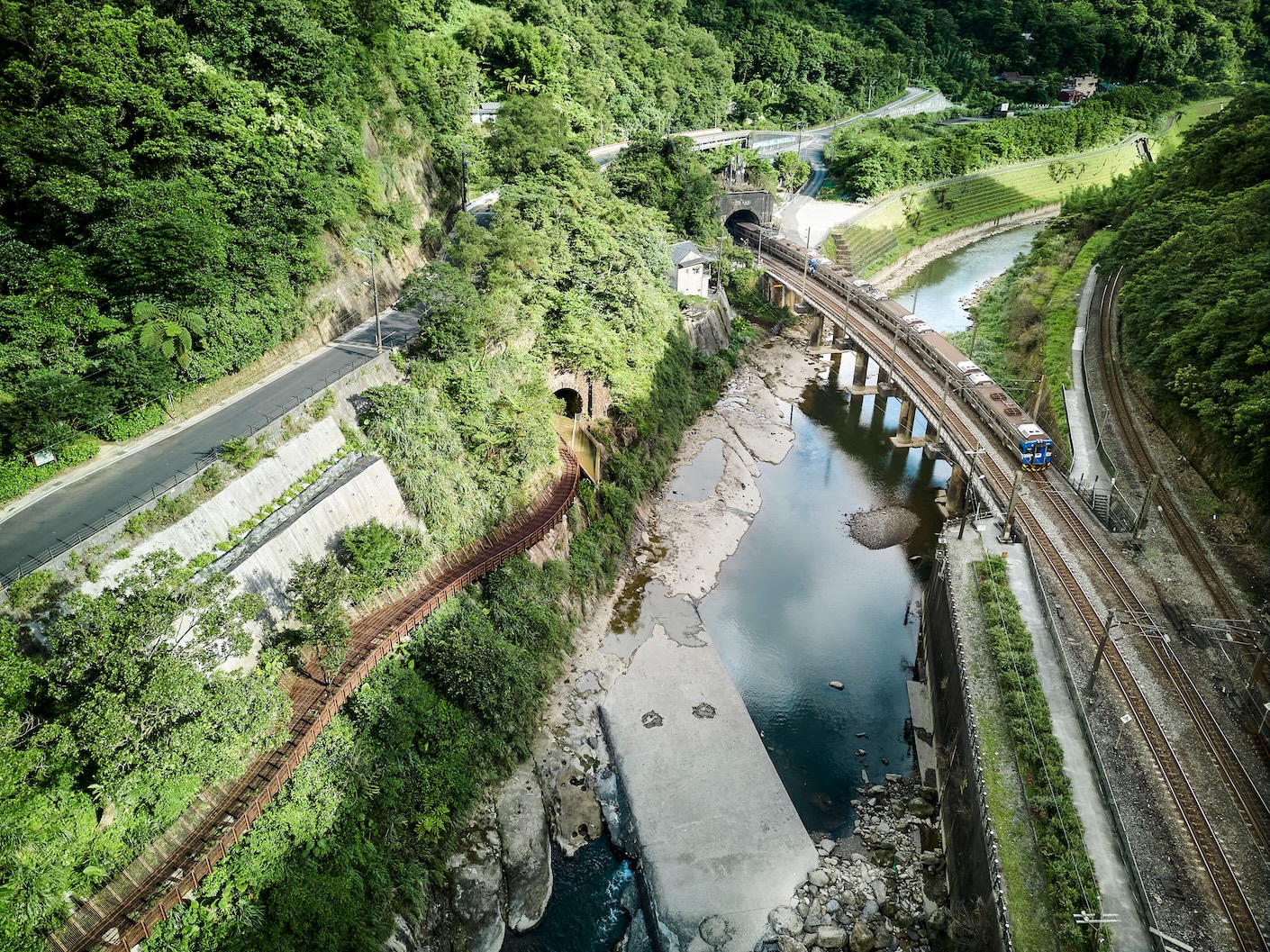
SanDiaoLing, which received the Grand Prize at the Grand Prix AFEX 2023 Awards, an international award for French architects working abroad, has recently emerged as a popular new travel destination. Known as the “Time-Space Dark Line,” this cycling route balances the needs of tourism with ecological conservation, making it a rare example of public infrastructure that successfully integrates both.
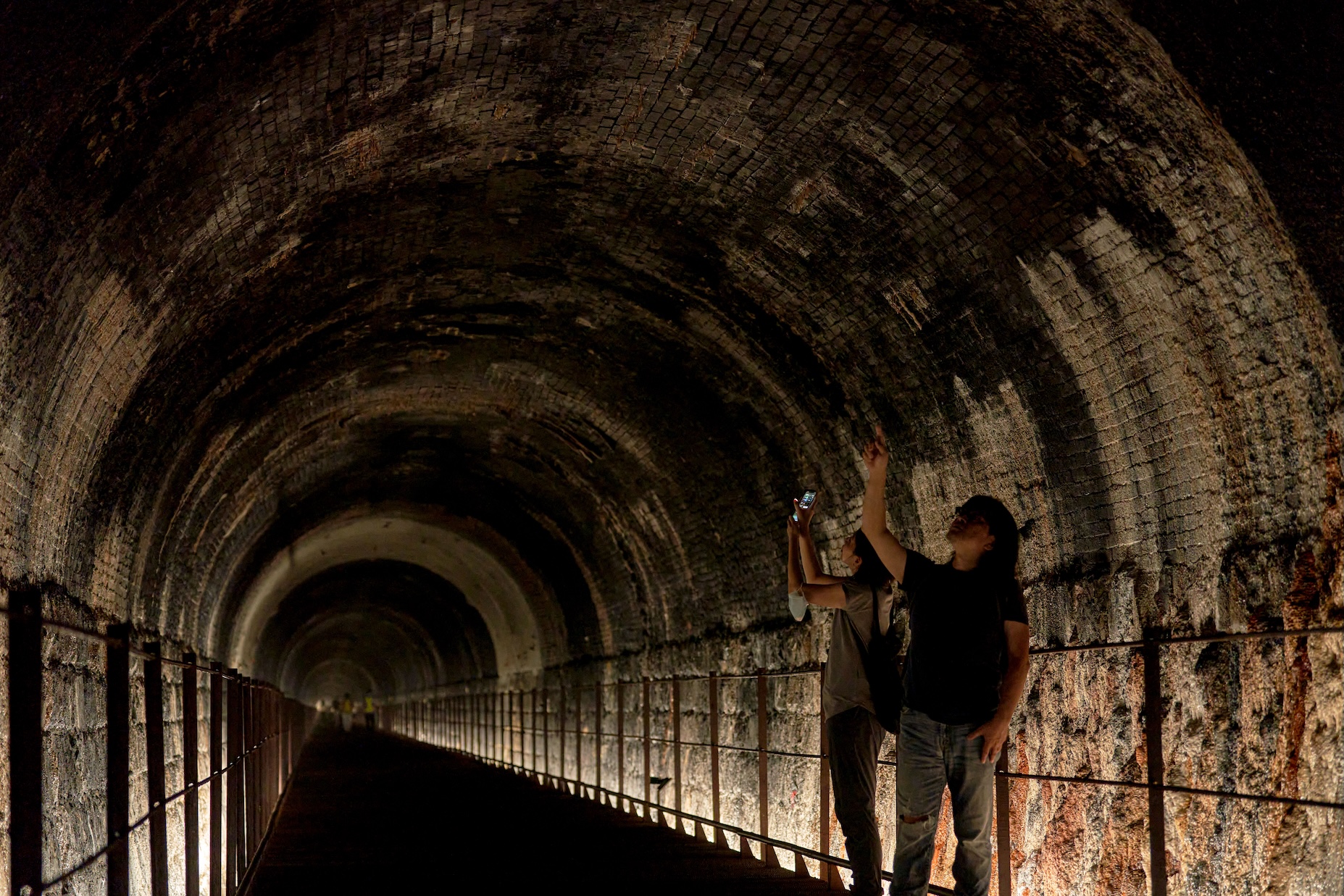
In 1922, the Japanese government constructed the Old SanDiaoLing Tunnel to transport mining carts. After the end of World War II, the tunnel was incorporated into the Taiwan Railways Administration’s Yilan Line. However, because the tunnel could accommodate only a single track and was too narrow for continued railway operations, it was closed in 1985. Nearly four decades later, the former railway tunnel has been revitalized as a cycling route, with structural reinforcements and a widened passageway to accommodate cyclists.
Bridging Past and Future — SanDiaoLing’s Unique “Dark Line”
Landscape architect Chung-Hsun Wu chose to preserve the tunnel’s original historical traces—including the reinforcements from its mining days and the soot left behind by passing trains—as well as the natural ecosystem that developed during the 40 years following its abandonment, such as dripping groundwater, underground streams, and bats. Rather than treating these elements as remnants to be removed, he regarded them as an essential part of the site’s history and local identity.
(Pictured below: Landscape Architect Chung-Hsun Wu)

Challenging the conventional engineering approach of prioritizing safety through comprehensive structural reinforcement, the project instead adopts monitoring as an alternative to blanket reinforcement. Advanced technologies are used to assess structural conditions and evaluate safety risks, allowing the tunnel’s historical character and natural ecology to coexist with its new life as a cycling route.
Experiencing the Beauty of the Environment Through Details — People-Centered Sustainable Coexistence
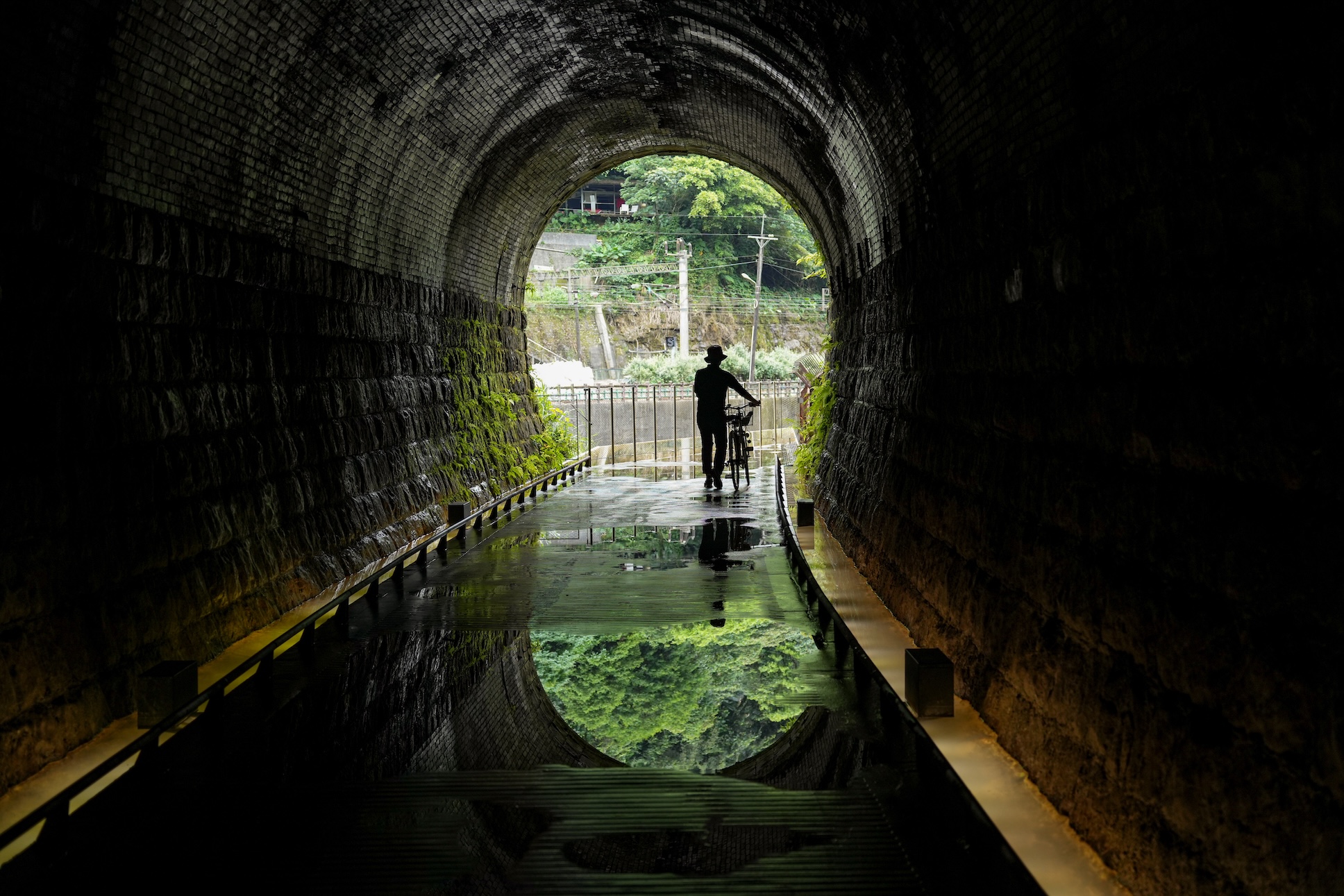
The entire route is constructed with 500,000 steel reinforcing bars. The gaps between them allow pedestrians to catch glimpses of the native landscape beneath their feet, while the trail’s design invites users to experience the changing terrain and scenery—from sand and water to stone. Each section of the route therefore reveals its own distinctive beauty.
The deliberate use of a single material also makes the design “as understated as possible,” avoiding excessive material variation and visual distractions. The intention is to direct users’ attention toward the subtle changes in the surrounding environment.
Wu Chung-Hsun emphasizes that people have become overly accustomed to the fast pace of modern life, gradually losing their sensitivity to their surroundings. In the past, cycling infrastructure in Taiwan often focused on physical facilities and tourism appeal, while overlooking the intrinsic value of the environment itself.
Looking ahead, landscape design for cycling routes should place greater emphasis on environmental sustainability, the public nature of land, and the connection between people and their surroundings. The responsibility of contemporary designers is not merely to transform the environment, but also to create a medium through which people can learn to respect, experience, and interact with it.