Content Reproduced:三立新聞網, Lifestyle Center | Reported by 潘靚緯

VELO General Manager Ann(left) joins forces with fashion designer Chundie Zhu (right) for a cross-industry collaboration showcased at Shanghai Fashion Week. (Photo: Screenshot)
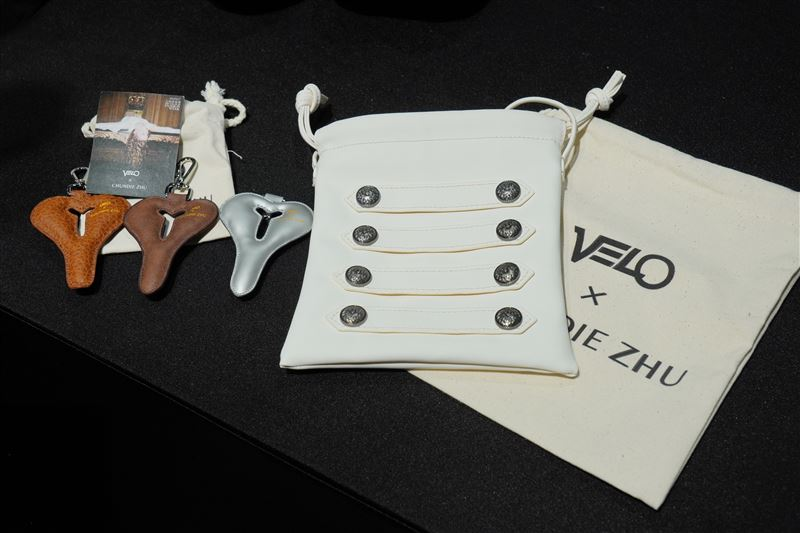
VELO, a leading Taiwanese bicycle saddle manufacturer, has teamed up with a fashion designer to transform leftover leather scraps from saddle production—materials too small or unsuitable to be made into complete saddles—into practical everyday accessories, including miniature saddle-shaped keychains and small carry bags. The designer has also incorporated saddle-inspired silhouettes into vests, jewelry, and handbags. The collection was showcased at Shanghai Fashion Week Spring/Summer 2027, extending the concept of a circular economy from the bicycle industry into cross-industry collaboration.

The designer transforms leftover saddle leather into practical everyday accessories, including jewelry and small bags. (Photo: Screenshot)

VELO has long been committed to promoting resource reuse, approaching the circular economy through both internal and external initiatives. Internally, the company continues to promote recycling, reuse, waste reduction, and redesign. Externally, it collaborates with industry partner SRAM to ensure materials are reused at equivalent value.
VELO General Manager Chen An-Rong explained, “Although the leather scraps left over from saddle production are still usable, their varying sizes and shapes make it difficult to incorporate them into our existing products. We have been continually exploring other ways to use these materials, which led us to collaborate with fashion designer Chundie Zhu to discover new applications through design.”
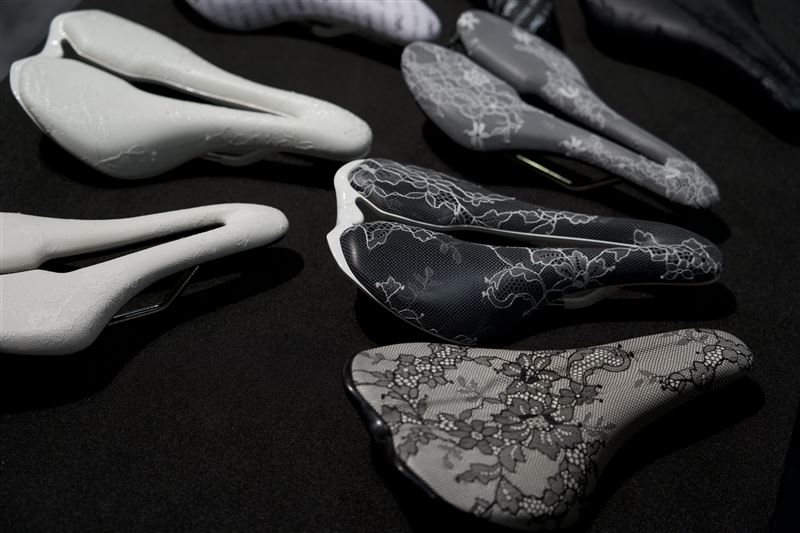
A major bicycle saddle manufacturer collaborates with the fashion industry, with the designer also incorporating fabric into saddle designs. (Photo: Screenshot)
Fashion designer Chundie Zhuhas given leather scraps a second life by transforming them into small bags and miniature saddle-shaped keychains. With a background in fashion design and painting, Zhu specializes in incorporating gauze, lace, draping, layering, and deconstruction into her creations.
“Leftover materials are ideal for small fashion accessories because, unlike complete bicycle saddles, these items do not require materials to meet specific size requirements. Using scraps is inherently more sustainable. VELO’s saddle leather has a pleasant texture and is highly durable, making it well suited for small bags and keychains. Many people still use keys today, and a keychain is something that can accompany them for years,” Zhu said.
In addition, Zhu has combined leftover lace fabrics, feathers, and pearls from garment production with bicycle saddle leather. Working with the VELO team, she has developed these materials into functional saddles that can actually be used for cycling. The collaboration brings leftover materials from two industries together in a single product, allowing design concepts to originate in the bicycle industry, be reimagined by a designer, and ultimately return to practical use.
Founded in 1979 and headquartered in Dajia District, Taichung, VELO is celebrating its 47th year in business in 2026. Drawing on nearly half a century of saddle manufacturing expertise and craftsmanship, the company is using this cross-industry collaboration to rethink materials, product structures, and functionality while exploring new possibilities for bicycle saddles.
“Leftover materials are not waste. With a different approach, they can begin a new life cycle,” said General Manager Chen An-Rong. He emphasized that VELO will continue to reduce resource waste through product design and manufacturing processes while pursuing more cross-industry collaborations to discover new applications and value for existing materials.